Commercial Investment Purchase for a First-Time Commercial Investor
The latest industry news and guides from Active Mortgages.
The latest industry news and guides from Active Mortgages.
Our client was a successful business owner operating an established aesthetics clinic in London through a limited company structure. Having built up strong retained profits over several years, they were looking for a way to make their capital work harder rather than leaving funds sitting in a business account earning minimal interest.
The client had no previous buy-to-let or commercial investment experience and currently only owned their residential home personally. Their long-term ambition was to gradually transition into property investment while continuing to grow their core business operations.
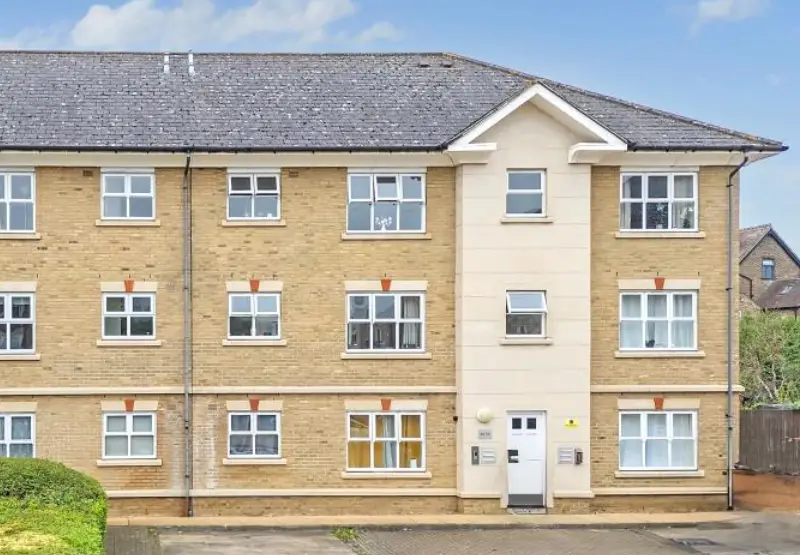
An opportunity arose to purchase a mixed-use commercial unit near King’s Cross railway station, London, through a newly formed limited company owned by their holding company.

The proposed purchase presented several complications that limited mainstream lender options.
The property was being purchased as a commercial investment, however at the time of enquiry the unit was vacant with no tenant in place. Many lenders require a signed lease agreement or an existing tenant before they will consider long-term commercial mortgage funding.
The client had submitted two offers:
The client also intended to borrow at 75% loan-to-value, using retained business profits as the deposit source through an intercompany transfer structure.
Additional complexities included:
The client wanted to secure a straightforward commercial investment mortgage rather than take short-term bridging finance and refinance later.
After reviewing the case, we identified that the strongest route would be to structure the transaction as a commercial investment purchase with a tenant lined up either prior to or simultaneously with completion.
The property itself was well positioned near King’s Cross railway station with strong rental demand and realistic projected rental income of approximately £33,000–£44,000 per annum. The rental stress calculations indicated the deal could comfortably support borrowing at 75% loan-to-value, even under higher commercial interest rate assumptions.
We discussed several potential approaches with the client, including:
Rather than targeting traditional high street lenders, we focused on challenger banks and specialist commercial lenders with more flexible underwriting criteria for first-time commercial investors.
Following our initial assessment, we were confident there would be multiple viable lender options available subject to securing a tenant agreement before completion.
The client was able to proceed with negotiations knowing:
Most importantly, the client avoided moving unnecessarily towards costly bridging finance and instead explored a more efficient long-term funding solution from the outset.
This case highlights how commercial finance solutions can still be achieved even when several “red flags” exist on paper.
Many brokers may have dismissed the deal immediately due to:
However, by understanding the client’s wider business profile, retained profits, exit strategy and the strength of the location itself, we were able to identify a realistic path forward.
It also demonstrates the importance of lender selection in commercial finance. While some lenders operate with rigid criteria, specialist lenders are often willing to take a more commercial view where the fundamentals of the deal are strong.
| Cookie | Duration | Description |
|---|---|---|
| cookielawinfo-checkbox-analytics | 11 months | This cookie is set by GDPR Cookie Consent plugin. The cookie is used to store the user consent for the cookies in the category "Analytics". |
| cookielawinfo-checkbox-functional | 11 months | The cookie is set by GDPR cookie consent to record the user consent for the cookies in the category "Functional". |
| cookielawinfo-checkbox-necessary | 11 months | This cookie is set by GDPR Cookie Consent plugin. The cookies is used to store the user consent for the cookies in the category "Necessary". |
| cookielawinfo-checkbox-others | 11 months | This cookie is set by GDPR Cookie Consent plugin. The cookie is used to store the user consent for the cookies in the category "Other. |
| cookielawinfo-checkbox-performance | 11 months | This cookie is set by GDPR Cookie Consent plugin. The cookie is used to store the user consent for the cookies in the category "Performance". |
| viewed_cookie_policy | 11 months | The cookie is set by the GDPR Cookie Consent plugin and is used to store whether or not user has consented to the use of cookies. It does not store any personal data. |

Book a call with one of our team to talk about your requirements.